

What Shapes the Price of a Whole-House Interior Repaint?
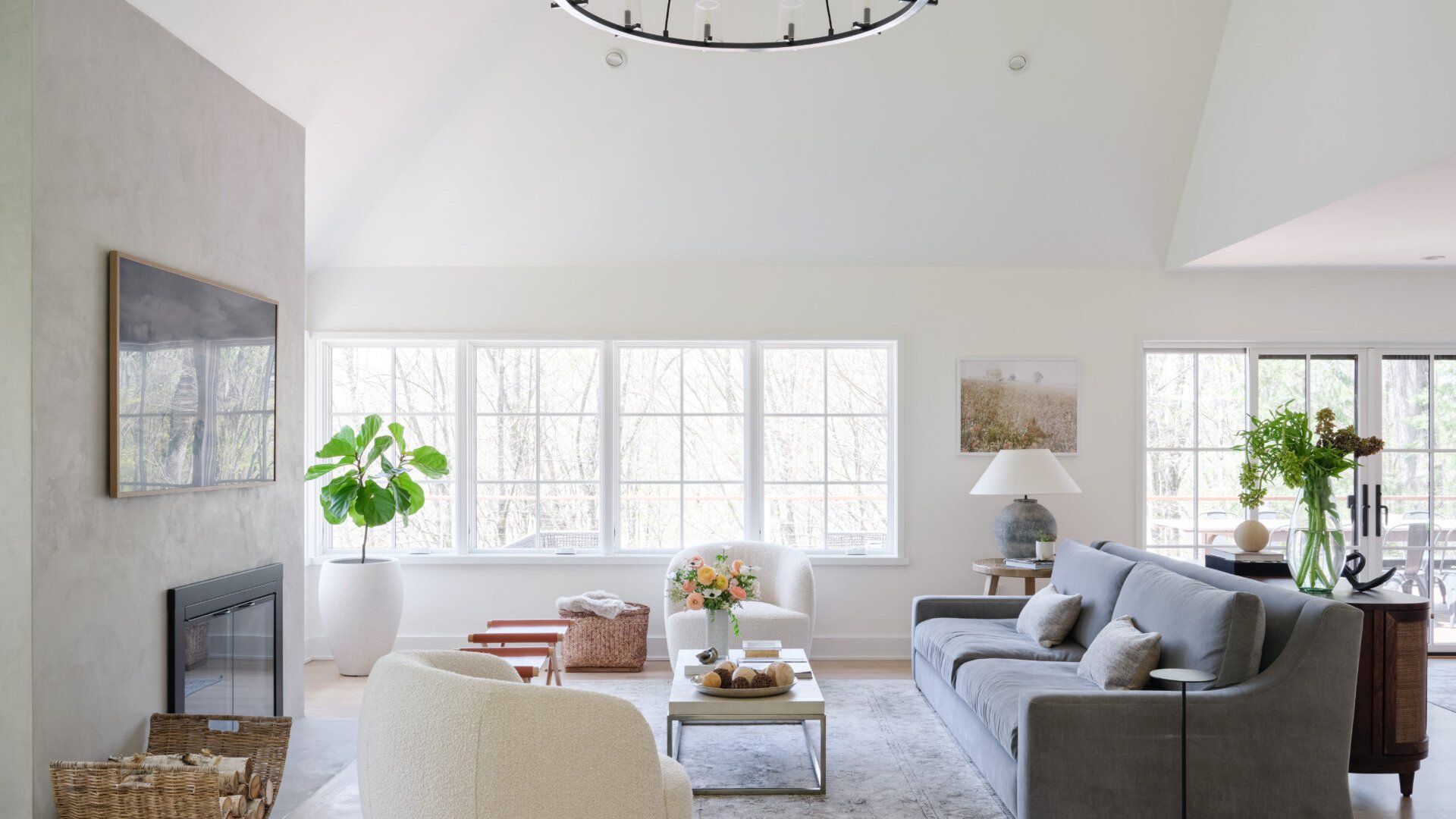
What’s in the rooms sets the price of a whole-house interior repaint far more than square footage does. Ceiling heights, plaster repair, trim and doors, color changes, special finishes, furniture and access all move it, as does painting all at once or in phases.
Before we come out, walk the house with a notepad. List every room you want painted, which ceilings are included, which doors and windows get their trim done, and any cracks you’ve been watching. That list is most of what we’ll price.
In Chappaqua, the list can look very different from one house to the next. Houses here cluster in two eras: 37% were built before 1940 and 38% between 1980 and 1999, per the U.S. Census Bureau’s American Community Survey (2019-2023). Older center-hall colonials near the village sit a short drive from 1980s and 1990s colonials with taller rooms and more drywall.
We paint across Chappaqua and the rest of New Castle, the town it sits in, and next door in Pleasantville. Older and newer houses there rarely price the same way.
Why do houses of the same size get such different prices?
Houses of the same size get different prices because painters work on walls, ceilings, trim and doors, and square footage only measures floor. A center-hall colonial near the village can carry far more trim and plaster repair than a newer colonial with the same footprint. A newer house may have a tall stair hall that needs planks or scaffolding instead.
Plaster is usually the biggest swing in the older houses. Cracks, loose sections and old patches all get fixed before any paint goes on. How much of that a house needs only shows up in person.
That’s why we price from a walk-through, room by room. A square-foot figure tends to miss in both directions: too low for a plaster house with deep trim, too high for a plain drywall house with simple casing.
The factors we price, and how to prepare for each
Most of the price of a whole-house repaint comes from the factors below, and each is something you can look at before we visit. Use the last column as a checklist, and bring your notes to the consultation.
| Factor | Why it changes the price | How to prepare |
|---|---|---|
| Rooms and ceiling heights | Tall rooms and stair halls carry more wall per room, and the highest spots need planks or scaffolding to reach safely | Decide which rooms and which ceilings are in the scope |
| Wall condition and plaster repair | Cracks, loose plaster, old patches and nail pops get fixed before any paint goes on, and in an older house repair is often the biggest variable | Point out the cracks you’ve watched open and close with the seasons |
| Trim, doors and built-ins | Casing, crown, wainscot and paneled doors take more hand work than flat walls | Decide which doors get painted on both sides and whether built-ins are included |
| Color changes | Going from dark to light, or covering a strong color, takes a tinted primer and extra coats | Settle colors before the schedule, using large samples on your own walls |
| Special finishes and wall coverings | Lacquer, high gloss, lime wash and wallpaper need more prep and a more practiced hand | Gather the samples or wallpaper your designer has picked |
| Furnished or empty rooms | Moving, covering and resetting furniture adds time in every room | Clear small items, art and anything fragile before we start |
| Access and phasing | Back stairs, parking, pets and a busy household all change how fast a crew can move, and phasing repeats setup | Tell us about pets, alarm codes and the hours the house is busiest |
Special finishes are their own category. A dining room in high-gloss lacquer or a powder room in wallpaper takes more prep than a painted wall. Our special finishes and wall coverings work covers both.
Bring that list to a free in-home consultation and we’ll turn it into a written proposal. Call 1 (800) 687-9470.
How long does it take to paint a house interior?
Painting a house interior takes as long as its scope. We set the schedule with you before work starts, instead of guessing from the size of the house. Plaster repair, tall rooms, color changes and a furnished house all add days. Empty rooms, sound walls and the same colors take fewer.
Winter is the indoor window. Interior work doesn’t depend on the weather. In Chappaqua, as in much of northern Westchester, families tend to plan it around school breaks and holiday travel.
What goes into our whole-house proposals?
A whole-house proposal from Palette Pro Painting & Renovation starts with a walk-through of every room on your list. It spells out the scope in detail so you can see where the price comes from, and we revise it until it fits.
In our Google reviews, customers often raise timing: crews arriving when they said they would, and jobs finishing on the date agreed. That starts at a pre-production meeting, where we agree on the sequence before anyone opens a can. Once we’re working, you get a daily update. At the end, we go room by room with you and clear the punch list.
We still enjoy that last walk-through on a whole house. With every room done in one pass, the colors finally work together from the front hall to the back bedroom, and the house reads as one place again. You can see finished rooms in our interior painting gallery.
Not every job needs a whole-house proposal. If you only need a room refreshed or a short list of touch-ups, our Painter for a Day program is the better fit. Our interior painting crews take on single rooms, too.
Frequently Asked Questions
How much does it cost to paint the interior of a whole house?
Whole-house interior painting costs depend on the amount of wall, ceiling and trim in the house and the shape it’s in. Color changes and detail work add to it. Plaster repair, tall stair halls and special finishes push it up, while empty rooms, sound walls and familiar colors bring it down. We’ll walk the house with you at a free in-home consultation and give you a clear, detailed estimate.
Is it cheaper to paint the whole house at once or room by room?
Painting the whole house at once usually costs less overall than doing it room by room over separate visits. Setup, protection and cleanup happen once, and the crew moves through the rooms in order. Phasing still makes sense when you need parts of the house in use or want to spread the work out. It just repeats some of that setup each time.
Does repainting in the same colors cost less?
Repainting in the same colors usually costs less than a color change, because the new coats cover more easily and there’s no tinted primer to lay down first. Prep doesn’t change, though: cracks, nail pops and worn trim still get fixed before anything goes on. Changing sheen can add a step too, especially on walls with a lot of patching.
Are ceilings and trim included in an interior paint price?
Ceilings and trim are part of an interior paint price only when the scope includes them, so it’s worth deciding early which ones you want done. Ceilings need their own setup and a flat finish, and trim and doors take more hand work than walls. We’ll go through both with you at the consultation and price the scope you choose.
Can you estimate a whole-house repaint from photos?
Photos help us understand a whole-house repaint before we visit, and for small jobs they can be enough to pre-qualify the work. For a whole house, we still walk every room before writing the proposal, because ceiling heights, plaster and trim don’t show up well in pictures. Sending photos first makes that visit more useful.
In a town with this much variety in its houses, the price has to come from the rooms themselves. Palette Pro Painting & Renovation has over 2,000 completed projects across Westchester County, NY and Fairfield County, CT, and 4.9 stars across 140+ Google reviews. Call 1 (800) 687-9470 and we’ll walk the house with you.
